Smart manufacturing is reshaping how factories operate by combining automation, data exchange, and intelligent control systems. At the center of many of these advancements is the electric actuator, a device that converts electrical energy into precise mechanical motion. As industries continue to move toward more connected and efficient production systems, the electric actuator has become a critical component in enabling accuracy, flexibility, and real-time control.
What Is an Electric Actuator
An electric actuator is a mechanical device powered by electricity that produces controlled movement, typically linear or rotary. Unlike hydraulic or pneumatic systems, an electric actuator relies on motors and electronic controls rather than fluid pressure or compressed air. This makes it highly precise and easier to integrate with digital control systems used in modern manufacturing environments.
Electric actuators are commonly used to open and close valves, position machine components, move robotic arms, and automate assembly processes. Their ability to provide accurate positioning and repeatable motion makes them essential in applications where consistency and reliability are required.
Electric Actuators in Smart Manufacturing Systems
In smart manufacturing, machines are no longer isolated systems. Instead, they communicate with each other and adapt in real time based on data inputs. The electric actuator plays a key role in this environment by serving as the physical execution point for digital commands.
For example, when a sensor detects a change in pressure, temperature, or product flow, the control system can instantly send a signal to an electric actuator to adjust a valve or reposition equipment. This seamless interaction between software and mechanical systems is what allows smart factories to operate with minimal human intervention.
Because electric actuators can be precisely controlled through programmable logic controllers and industrial networks, they fit naturally into Industry 4.0 frameworks.
Key Applications of Electric Actuators in Industry
The use of electric actuators spans a wide range of industries and applications. In manufacturing, they are commonly found in conveyor systems where they help regulate speed and direction. In automotive production, electric actuators are used in robotic welding arms and assembly lines to ensure precise movement.
In the energy sector, they control valves in pipelines and power plants, ensuring safe and efficient operation. In food and beverage production, electric actuators help maintain hygiene standards by reducing the need for hydraulic fluids or compressed air systems that could introduce contamination risks.
Their versatility makes the electric actuator suitable for both heavy industrial tasks and delicate precision operations.
Benefits of Using Electric Actuators
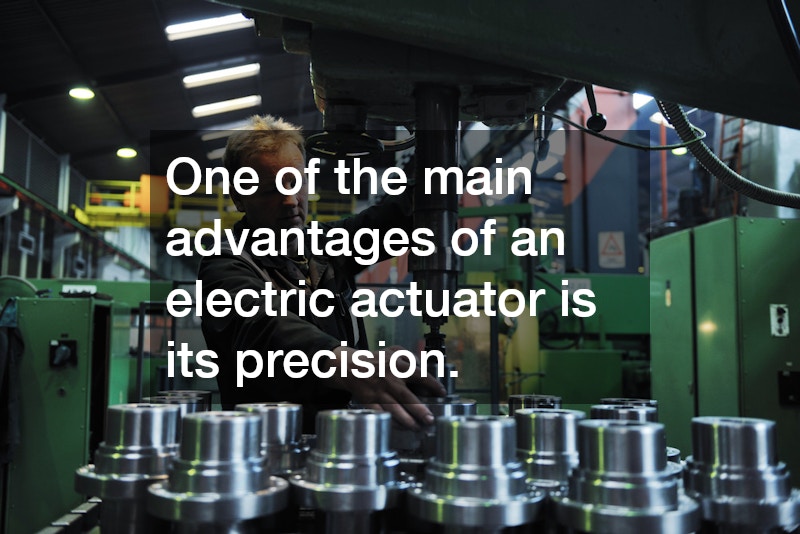
One of the main advantages of an electric actuator is its precision. It can achieve highly accurate positioning, which is essential in automated production lines where even small deviations can lead to defects.
Energy efficiency is another major benefit. Electric actuators only consume power when in motion, unlike pneumatic systems that require continuous air compression. This leads to lower operational costs over time.
Maintenance requirements are also reduced. Since electric actuators have fewer moving parts and do not rely on fluids, there is less risk of leaks, contamination, or wear caused by pressure systems. This improves system reliability and reduces downtime.
Additionally, electric actuators are easier to integrate into digital control systems, allowing for remote monitoring, diagnostics, and predictive maintenance.
Integration into Smart Manufacturing Environments
Integrating an electric actuator into a smart manufacturing system involves connecting it to sensors, controllers, and data platforms. Once integrated, the actuator can respond dynamically to changes in production conditions.
For instance, if a production line detects a bottleneck, the system can automatically adjust actuator positions to redistribute workflow. This adaptability helps improve efficiency and reduce waste.
Modern electric actuator systems also support data collection, allowing manufacturers to analyze performance trends and optimize operations over time. This data-driven approach is a key element of smart manufacturing.
Challenges and Considerations
Despite their advantages, electric actuators also come with certain challenges. One limitation is that they may not always provide the same level of force as hydraulic systems in extremely heavy-duty applications. This means careful selection is required, depending on the workload.
Another consideration is initial cost. While electric actuators can reduce long-term operational expenses, the upfront investment may be higher compared to simpler pneumatic systems.
Environmental factors such as extreme heat, moisture, or dust can also affect performance, so proper housing and protection may be necessary in harsh industrial settings.
The Future of Electric Actuators in Industry
As smart manufacturing continues to evolve, the role of the electric actuator is expected to expand even further. Advances in artificial intelligence, machine learning, and IoT connectivity will make actuators more intelligent and autonomous.
Future electric actuator systems may be able to self-diagnose issues, optimize their own performance, and communicate directly with other machines to coordinate complex tasks without human input. This will further enhance efficiency and reduce downtime across industrial operations.
In addition, improvements in materials and motor technology will likely lead to more compact, powerful, and energy-efficient actuators that can be used in an even wider range of applications.
Improve Your Automation Systems Today
If you are looking to enhance efficiency, precision, and control in your industrial operations, integrating an electric actuator into your system is a powerful step forward. Whether you are upgrading existing equipment or designing a new smart manufacturing setup, electric actuators can help you achieve greater performance and reliability across your processes.