In the world of property management and homeownership, there is a silent predator that often goes unnoticed until the end of the month: the “Efficiency Gap.” This gap represents the difference between what you should be paying for climate control and what you actually see on your utility bill.
Most people wait for a total system failure before they call an HVAC company. However, by the time your unit stops blowing air, you have likely already spent thousands of dollars in wasted energy. A “Hidden Efficiency” audit is designed to find those leaks, mechanical drags, and outdated components that turn your building into a financial sieve.
The Economics of Heating and Cooling
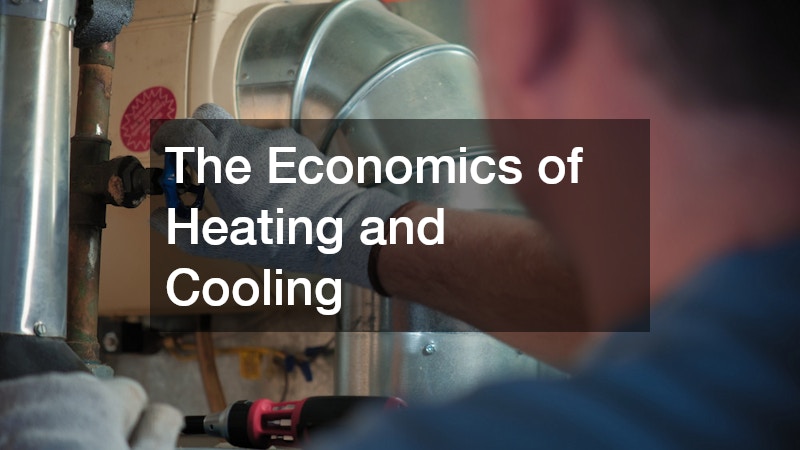
The primary function of any building is to provide a controlled environment. Whether it’s a high-rise office or a suburban bungalow, heating and cooling accounts for roughly 40% to 60% of total energy consumption. When a system is unoptimized, that percentage can skyrocket.
The True Cost of “Just One More Repair”
Many property owners fall into the trap of the “Sunk Cost Fallacy.” They believe that because they spent $500 on a blower motor last year, they must keep the unit running to “get their money’s worth.” In reality, AC repair companies often see older units that are operating at 60% of their original factory efficiency.
If you are calling for a furnace replacement repair every single season, you aren’t just paying for the parts and labor; you are paying for the inefficiency of an obsolete machine. Transitioning to a modern, high-efficiency system can often pay for itself in energy savings within five to seven years.
Residential vs. Commercial HVAC Complexity
Understanding the scale of your audit depends heavily on the type of structure you manage. While the physics of thermodynamics remain the same, the mechanical execution differs wildly between a home and a business. For instance, residential audits typically emphasize energy efficiency, focusing on insulation, heating systems, and appliance performance. In contrast, business audits may require a comprehensive assessment of industrial processes, including production efficiency and waste management. Each has its own set of regulations and guidelines to follow. Furthermore, the size and complexity of the operation also play crucial roles in determining the audit’s scope, timeline, and required expertise. Ultimately, a thorough understanding of both environments is essential for a successful audit process.
Navigating Commercial HVAC Challenges
In a business setting, commercial HVAC systems are significantly more complex. They often involve cooling towers, chillers, or massive rooftop units (RTUs) that must manage the heat load of computers, machinery, and dozens of employees.
A “Hidden Efficiency” audit for a business often reveals that the system was never commissioned correctly during the initial commercial HVAC installation services. If the sensors are miscalibrated, the system might be fighting itself—cooling one zone while heating another simultaneously.
The Precision of a Local HVAC Install
For homeowners, the “Hidden Efficiency” often boils down to the quality of the original local HVAC install. If a unit was oversized “just to be safe,” it will cycle on and off too quickly. This “short-cycling” prevents the system from dehumidifying the air and puts massive strain on the compressor, leading to an early AC replacement.
Identifying the Warning Signs
How do you know if your building is failing its own audit? Here are the red flags that suggest you need to contact local HVAC contractors for a professional evaluation:
- Humidity Imbalance: If your indoor air feels “sticky” in the summer or “bone-dry” in the winter, your system is failing to manage the latent heat load.
- Ghost Noises: Banging, whistling, or grinding sounds indicate mechanical friction. Friction equals heat, and heat equals wasted energy.
- The “Thermostat War”: If different rooms have vastly different temperatures, your ductwork or zoning system is likely compromised.
- Exponential Utility Spikes: Compare this month’s bill to the same month three years ago. If the usage (kWh) has increased while your habits stayed the same, your hardware is degrading.
The Role of Professional Air Conditioning and Heating Companies
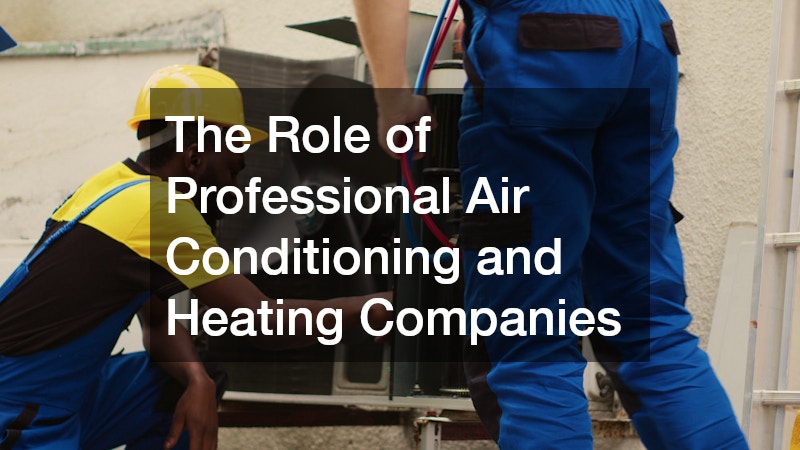
A true efficiency audit cannot be done with a simple flashlight and a ladder. It requires specialized tools like thermal imaging cameras to find insulation gaps and manometers to measure static pressure within the ducts.
Elite air conditioning and heating companies use these tools to create a roadmap for your building’s health. They don’t just look at the box outside; they look at the “envelope” of the building.
Why Choose Local?
Working with local HVAC contractors offers a distinct advantage: they understand the specific climate challenges of your region. A contractor in the humid Southeast will prioritize moisture removal, while one in the North will focus on the integrity of the heat exchanger during a furnace replacement repair.
The Path Forward: Repair or Replace?
The conclusion of any audit usually leads to a crossroads. Do you continue to maintain, or is it time for a full upgrade?
- When to Repair: If the unit is under 10 years old and the repair cost is less than 30% of the cost of a new unit.
- When to Replace: If the unit uses R-22 refrigerant (which is phased out and expensive), if the “Hidden Efficiency” audit shows a SEER rating below 13, or if the cost of AC replacement can be offset by local tax credits and energy rebates.
The Impact of Modern Commercial HVAC Installation Services
For businesses, upgrading is often a tax-advantaged move. New commercial HVAC equipment can often be depreciated quickly, and the reduction in overhead costs improves the net operating income (NOI) of the property. When you hire for commercial HVAC installation services, you aren’t just buying a machine; you are buying a 15-year insurance policy against rising energy prices.
The Technical Anatomy of an Efficiency Audit
When local HVAC contractors arrive to perform a “Hidden Efficiency” audit, they aren’t just looking for broken parts; they are looking for “systemic friction.” To understand why your building is costing you too much, we have to look at the three pillars of HVAC performance: Airflow, Thermodynamics, and Electrical Draw.
The Invisible Thief: Static Pressure
One of the most common reasons a local HVAC install fails to meet its efficiency rating is improper duct sizing. Think of your HVAC system like a heart and your ducts like arteries. If the arteries are too small or clogged, the heart has to pump twice as hard to move the same amount of blood. In a building, this is measured as “static pressure.”
If your ducts are restrictive, your blower motor consumes significantly more electricity to push air through the vents. Over time, this doesn’t just raise your bill; it burns out the motor, leading to an emergency call to an AC repair company. An audit measures this pressure to ensure your system isn’t “suffocating.”
Refrigerant Charge and Heat Transfer
Your heating and cooling system relies on a precise chemical balance to move heat from inside to outside. If the refrigerant level is off by even 5%, the efficiency of the heat exchange process can drop by as much as 20%. This is a “hidden“ cost because the system will still “work”—it will blow cold air—but it will run for 14 hours a day instead of 8 to achieve the same temperature.
Deep Dive into Commercial HVAC Infrastructure

For those managing larger properties, the “Hidden Efficiency“ audit must go beyond the individual unit and look at the building’s automation and integration. Commercial HVAC is a different beast entirely because of the sheer volume of air and the diversity of “load“ within the building.
The Impact of Modern Commercial HVAC Installation Services
In older commercial buildings, systems were often designed with a “one size fits all“ mentality. Modern commercial HVAC installation services now utilize Variable Air Volume (VAV) boxes and Variable Frequency Drives (VFDs).
A VFD allows a motor to run at 50% speed if the building only needs 50% cooling. Older systems are either 100% “on“ or 100% “off.“ Imagine driving a car where the only way to control your speed was to floor the gas pedal and then turn the engine off repeatedly. That is how an unoptimized commercial system operates. An audit identifies where these “all-or-nothing“ motors can be replaced or upgraded to save thousands in demand charges from the utility company.
The Role of Economizers
A “hidden“ feature in many commercial HVAC units is the economizer. This is essentially a set of dampers that allows the system to pull in cool outside air to “free cool“ the building when the outdoor temperature is lower than the indoor target. If these dampers are stuck closed (a common issue), your compressors are running unnecessarily. A professional HVAC company will check these mechanical linkages as a standard part of their audit.
The “Envelope“ Factor: Why the System is Only Half the Story
Even the most expensive AC replacement cannot fix a building with a “leaky envelope.“ During a comprehensive audit, air conditioning and heating companies will often look at the building as a whole.
- Thermal Bridging: Are your window frames or metal studs conducting heat into the building?
- Stack Effect: Is cold air escaping through the basement while hot air is sucked in through the attic?
- Infiltration: Are unsealed gaps around pipes and wires allowing unconditioned air to bypass your filters?
If your building is “leaky,“ your heating and cooling system is essentially trying to air condition the entire neighborhood. This is why a “Hidden Efficiency“ audit is as much about the structure as it is about the machinery.
Navigating the Furnace and Winter Efficiency
While much of the focus is on cooling, the “Hidden Efficiency“ audit is equally critical for the colder months. A furnace replacement repair is often the result of a “cracked heat exchanger”—a dangerous condition that can leak carbon monoxide.
Combustion Efficiency
For gas-fired furnaces, an audit includes a combustion analysis. This measures the ratio of fuel to oxygen. If the burn is “dirty,“ you are literally sending unburned fuel (and your money) up the chimney. Modern high-efficiency furnaces utilize secondary heat exchangers to capture the heat that used to be wasted, achieving AFUE (Annual Fuel Utilization Efficiency) ratings of up to 98%.
If your current furnace is rated at 80% AFUE, you are losing 20 cents of every dollar you spend on heat. Over a decade, that 20% “loss“ is often enough to pay for a brand-new local HVAC install.
The Financial Roadmap: Planning Your ROI
The final stage of a “Hidden Efficiency“ audit is the financial breakdown. A professional HVAC company won’t just give you a bill; they will give you a “Return on Investment“ (ROI) projection.
Rebates and Tax Incentives
Currently, federal and local governments offer significant incentives for upgrading to high-efficiency equipment. Whether it is a residential tax credit for an AC replacement or a commercial utility rebate for installing high-efficiency chillers, these incentives can often cover 10% to 30% of the total project cost.
Maintenance as an Investment, Not an Expense
The audit proves that proactive maintenance is the only way to keep the “Hidden Efficiency“ gap closed. By contracting with local HVAC contractors for twice-yearly visits, you ensure that:
- Coils stay clean (dirty coils can increase energy use by 30%).
- Electrical connections stay tight (loose wires cause heat and voltage drops).
- Drain lines stay clear (preventing expensive water damage repairs).
Final Summary: Taking Control of Your Environment
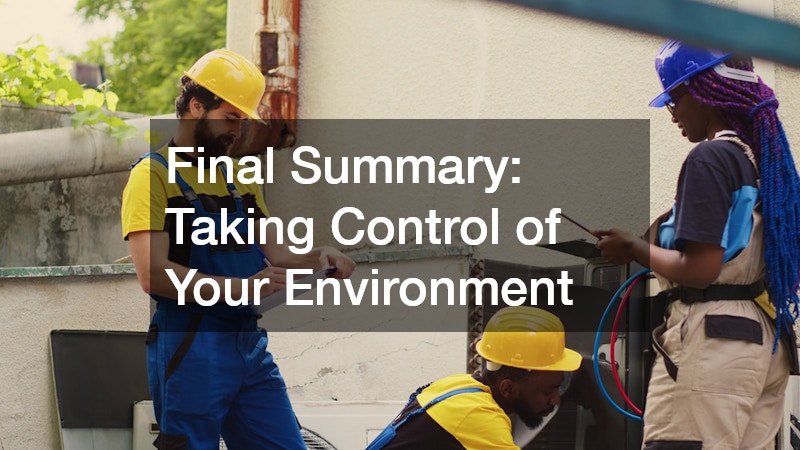
The “Hidden Efficiency“ audit is the difference between being a victim of your utility bill and being a master of your facility’s budget. By leveraging the expertise of air conditioning and heating companies, you can identify exactly where your dollars are escaping.
From the precision required in commercial HVAC installation services to the delicate balance of a home furnace replacement repair, every component of your climate control system offers an opportunity for optimization. Don’t let your building cost you more than it should. Reach out to a qualified HVAC company today and start seeing your building—and your budget—in a whole new light.