As companies expand their vehicle fleets, warehouses, and office spaces to meet growing demand, they often focus on the upside of growth while overlooking a less visible consequence: expanding liability exposure. More vehicles on the road, more employees on-site, and more physical property to maintain all create new opportunities for accidents, injuries, and legal disputes. Understanding where these risks come from, and how to manage them, can save a growing business from costly litigation and reputational damage. This article breaks down the key areas where expansion creates risk and what business owners and consumers interacting with these companies should know.
More Vehicles on the Road Increases Collision Exposure
Every additional vehicle added to a commercial fleet increases the statistical likelihood of an accident occurring during normal business operations. A company running 10 vehicles faces a fundamentally different risk profile than one running 50 or 100, simply because more vehicles on the road means more exposure to the variables a business can’t control: weather, traffic, and other drivers’ mistakes. Delivery vans, service trucks, and company cars all carry the company’s liability with them every time they leave the lot, whether a driver is making a quick local delivery or logging hundreds of miles on the highway.
When a collision happens, determining fault and navigating insurance claims can become complicated quickly, especially when multiple vehicles or injured parties are involved. A single multi-vehicle pileup involving a company truck can generate several simultaneous claims, each with its own injured party, damaged property, and legal representation. Add a shared intersection, conflicting witness statements, or a disputed traffic signal, and establishing liability can take months rather than days. Larger fleets also mean more drivers with varying skill levels, driving histories, and familiarity with specific routes or vehicle types, all of which affect accident frequency.
A newer hire operating an unfamiliar truck on an unfamiliar route carries more risk than a veteran driver on a regular route, and fleet growth often means onboarding both at once. That expanding pool of drivers, combined with more vehicles logging more cumulative miles, steadily raises the odds that any given week includes an incident requiring legal and insurance attention.
Every additional vehicle a company puts on the road statistically raises the odds of a collision, simply because more miles driven means more exposure to traffic, weather, and human error. A fleet that doubles in size without a matching increase in safety oversight isn’t just doubling its risk — it can increase it exponentially, since more vehicles also mean more scheduling pressure, tighter delivery windows, and potentially less time for proper vehicle inspections.
For individuals affected by a commercial vehicle collision, consulting a car accident lawyer early can make a significant difference in how a claim unfolds. These professionals understand how commercial insurance policies differ from personal auto coverage, including higher policy limits, multiple layers of liability, and the involvement of third-party logistics providers, and can help injured parties pursue fair compensation.
Fleet growth without corresponding investment in driver training and vehicle maintenance programs often correlates directly with higher accident rates. Companies that skip refresher courses on defensive driving, fail to monitor hours-of-service compliance, or delay brake and tire inspections are effectively trading short-term savings for long-term liability exposure. Even a modest uptick in minor collisions can signal deeper gaps in safety protocols that, left unaddressed, tend to escalate into more severe and costly incidents.
Hiring More Drivers Raises Screening and Training Demands
As fleets grow, companies must hire additional drivers to keep up with delivery schedules and service routes, and this hiring surge can strain existing screening processes. A rushed hiring process increases the odds of bringing on drivers with poor safety records or inadequate experience operating larger commercial vehicles. This is one of the most preventable sources of liability, yet it’s frequently where cost-cutting pressures show up first.
- Verify commercial driving records and license classifications before hiring
- Require defensive driving certification for all new hires
- Conduct regular drug and alcohol screening in compliance with regulations
- Monitor driving behavior through telematics and dash cameras
- Reassess training programs annually as fleet size changes
Expanding Warehouse and Facility Footprints Creates New Hazards
Growing a business often means adding new warehouses, distribution centers, or office locations, and each new facility introduces its own set of safety considerations. Loading docks, forklifts, high shelving, and increased foot traffic all create conditions where slip-and-fall accidents or equipment-related injuries become more likely. Facilities managers sometimes underestimate how quickly a larger footprint multiplies the number of potential hazard points.
Proper lighting, clear signage, and regular safety audits become even more critical as square footage increases. A single oversight, such as a poorly marked wet floor or an overloaded shelf, can lead to a serious injury and a costly claim. Businesses that scale their safety protocols alongside their physical growth tend to avoid the worst of these outcomes.
Roof and Structural Maintenance Becomes Harder to Track
Larger facilities typically mean larger and more complex roofing systems, and these are often neglected until a leak or structural failure forces attention. Flat commercial roofs, in particular, require routine inspection to catch ponding water, membrane damage, or drainage issues before they cause interior damage or collapse hazards. As a company adds buildings to its portfolio, keeping track of each roof’s maintenance schedule becomes a logistical challenge.
Partnering with experienced commercial roofers for scheduled inspections can help a growing company avoid the liability that comes with a sudden structural failure. A damaged roof that leads to falling debris or water damage affecting employees or customers can quickly become a legal and financial problem. Preventive maintenance contracts are often far less expensive than the fallout from a single serious incident.
Employee Injuries Become More Frequent at Scale
With more employees working across more locations, the raw number of workplace injuries tends to rise even if the injury rate per worker stays constant. This creates administrative pressure on human resources and safety teams to manage workers’ compensation claims consistently across every site. Inconsistent reporting or delayed responses to injuries can turn a manageable claim into a prolonged legal dispute.
When workplace injuries are severe or involve disputes over fault, employees sometimes turn to personal injury lawyers to understand their rights outside of standard workers’ compensation channels. This is particularly common in cases involving third-party equipment manufacturers or contractors working on-site. Businesses that maintain clear incident documentation and prompt medical response protocols are better positioned when these situations arise.
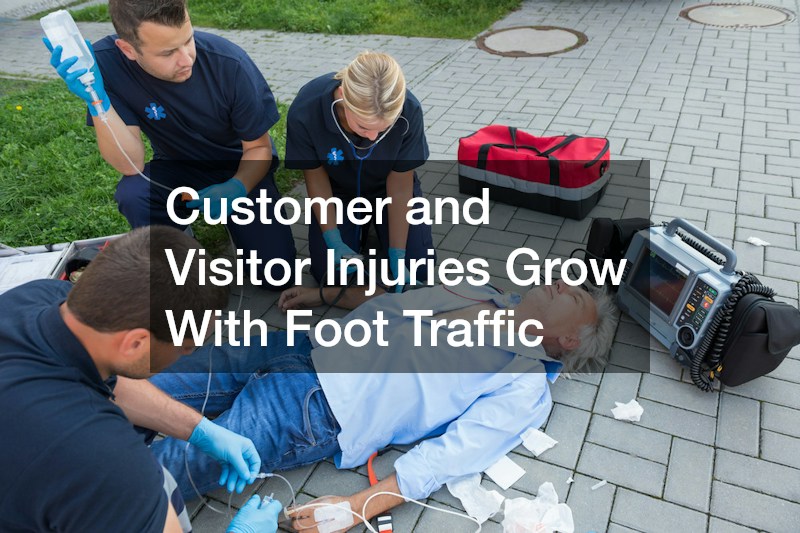
Customer and Visitor Injuries Grow With Foot Traffic
As a business opens more locations or welcomes more customers through its doors, premises liability exposure grows alongside it. Retail stores, showrooms, and public-facing offices all carry the risk that a customer could slip, trip, or otherwise be injured while on the property. Unlike employee injuries, these incidents aren’t covered by workers’ compensation, which means they often proceed straight toward a liability claim or lawsuit.
Companies expanding into new markets sometimes underestimate local safety code requirements, which can vary significantly between jurisdictions. A failure to meet these standards not only increases injury risk but also weakens a company’s legal position if an incident occurs. Regular facility walkthroughs focused specifically on visitor-facing areas can catch many of these issues before they result in harm.
Legal Preparedness Should Scale With the Business
Many growing businesses rely on the same basic legal and insurance setup they had when they were much smaller, which leaves gaps as operations expand. Liability coverage limits, contractor agreements, and incident response plans all need periodic review to ensure they match the current scale of the business. Waiting until after a major incident to discover these gaps is a costly way to learn this lesson.
Building a relationship with personal injury attorneys or a general business litigation firm before problems arise gives a company a resource to call on quickly when something does go wrong. Having this relationship in place can shorten response times and improve outcomes when disputes or claims surface. Growth should trigger a proactive legal review, not just a reactive scramble after an incident.
Growth is a sign of success, but it also multiplies the number of places where something can go wrong, from the road to the warehouse floor to the roof overhead. Businesses that treat liability management as a core part of scaling, rather than an afterthought, put themselves in a far stronger position to handle the inevitable bumps along the way. If your company is expanding its fleet or facilities, now is the time to review safety protocols, training programs, and legal preparedness rather than waiting for an incident to force the issue.