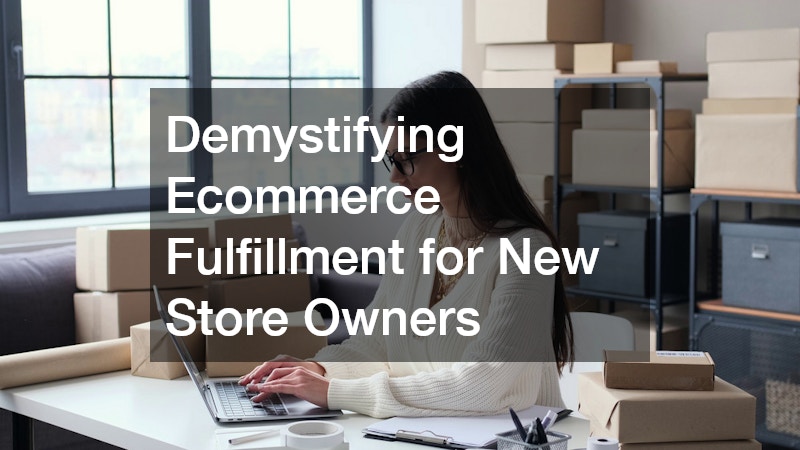
The thrill of making your first sales online can quickly turn into overwhelm when custom boxes and packing tape start piling up in your living room. New store owners often treat shipping as a minor afterthought, only to realize that inefficient processes lead to unexpectedly high costs, delayed deliveries, and frustrated buyers. Mastering the operational side of your backend logistics does not have to be an exhausting or daunting task. By breaking down the core stages of ecommerce fulfillment, retail beginners can build a highly seamless system that consistently delights customers and scales effortlessly over time.
The Core Stages of the Fulfillment Journey
To demystify the supply chain, you must first understand what fulfillment actually means in a digital landscape. It represents the entire lifespan of an order from the exact moment a customer clicks the checkout button on your website to the very second that package arrives safely at their doorstep.
Inventory Receiving and Warehousing
Before you can place an order, you need to manage your physical goods. Inventory receiving involves receiving bulk stock from your wholesale suppliers, carefully inspecting the boxes for any transit damage, and logging the exact item quantities in your digital inventory tracking software.
Once logged, strategic product storage becomes your best friend. Organizing items on shelves by size, popularity, or category saves significant time during the daily rush. Proper warehousing ensures that you always know exactly how much stock you have left, preventing the dread of accidental overselling.
Order Processing and Picking
The moment an order syncs automatically from your online storefront to your backend system, order processing officially begins. This digital notification prompts the creation of a dedicated packing slip and an optimized pick list.
The picking process requires a warehouse worker, or you in your garage, to locate the physical items from the shelves. Designing an organized layout that minimizes unnecessary footsteps across the floor prevents common errors, such as grabbing the wrong color or size, ensuring high accuracy from the start.
Choosing Your Fulfillment Model
Every growing online business eventually faces a major fork in the road regarding its physical supply chain. You must decide whether you want to continue packing every box yourself or hand the logistics reins to an external partner.
Evaluating In-House vs. Outsourced Logistics
Deciding how to allocate your operational resources will shape your daily routine and your profit margins. There are distinct pros and cons to keeping your logistics operations strictly internal versus relying on specialized external infrastructure.
The Bootstrapped Approach of Self-Fulfillment
When you are just launching, handling everything yourself from a spare room or small office makes excellent financial sense. This bootstrapped method grants you complete control over the unboxing experience, allows for custom handwritten thank-you notes, and carries very low initial overhead costs since you only pay for the storage space you already own.
Leveraging Third-Party Logistics Providers
As your daily order volume soars, outsourcing your operations to a third-party logistics provider (3PL) becomes a game-changer. These companies store your inventory in their massive warehouses, automatically pull incoming orders from your site, pack them efficiently, and ship them out using discounted carrier rates. This frees up a founder’s valuable time to focus strictly on brand marketing, product development, and customer acquisition.
The Hands-Off World of Dropshipping
If you prefer a completely hands-off approach to inventory management, dropshipping presents an alternative business model. Here, you do not purchase or store any upfront stock. Instead, when a buyer places an order, the manufacturer or wholesaler ships the product directly to the end consumer, eliminating upfront capital risks entirely.
Optimizing the Post-Purchase Experience
Once your orders are picked and securely packed into their boxes, your attention must shift toward the final leg of the delivery journey, which directly impacts customer loyalty.
Packaging, Shipping, and Handling Returns
Getting your products out the door requires selecting the right shipping carrier partners, such as USPS, FedEx, or UPS. The goal is always to find the sweet spot that balances swift delivery speeds against affordable shipping costs.
Additionally, you must design a clear, painless returns process. Providing a straightforward way for customers to exchange or return unwanted items builds immense long-term trust, turning one-time buyers into lifetime advocates for your brand.
While modern ecommerce fulfillment involves many moving parts, breaking the workflow down step by step removes the initial mystery. If you want to take your business to the next level, take some time this week to audit your current shipping workflow, or watch our embedded video guide to map out a scalable growth strategy.